Department of Computer Science
July 29, 2023 2026-09-17 21:17Department of Computer Science

-
About Department
-
Vision and Mission
-
Academic Programmes
-
Faculty
-
Facilities
-
Students
-
Research
-
Contact
The Department of Computer Science (DCS) at the Central University of Tamil Nadu (CUTN) is committed to excellence in teaching, research, and innovation in the rapidly evolving field of computing. Established with the vision of nurturing competent professionals and researchers, the department offers a vibrant academic environment supported by modern laboratories, experienced faculty, and a multidisciplinary curriculum.
DCS focuses on core computer science foundations, cutting-edge technologies, and industry-aligned skill development. Through a blend of rigorous coursework, hands-on practice, and project-based learning, the department prepares students to address real-world challenges with creativity and technical expertise.
Vision
To develop the department as a global leader in knowledge dissemination and to perform cutting edge research in computer science in compliance with international standards
Mission
- To produce students by inculcating them with state-of-the-art education to make them technically competent in solving real time problems
- To kindle students as efficient IT professionals, researchers and entrepreneurs
- To enrich the students as social, ethical and value-based graduates to make significant contribution to the society
Programmes Offered
The Department of Computer Science offers a structured set of undergraduate, postgraduate, diploma, and doctoral programmes designed to cater to diverse academic needs, industry requirements, and research aspirations.
1. B.Tech. Computer Science and Engineering (CSE)
Level: Undergraduate
Duration of the programme: 4 Years (Eight Semesters)
Programme Type: Full-Time
Sanctioned Strength: 30+1
Eligibility Criteria:
A candidate seeking admission to the B.Tech. Degree Programme shall have passed the Higher Secondary Examination (10+2 pattern) with Physics, Chemistry and Mathematics as mandatory subjects under Part III or any Examination recognized as equivalent, fulfilling eligibility norms of the University and Government of India.
Programme Overview:
The programme blends strong engineering fundamentals with modern computing technologies. It equips students with skills in programming, system design, AI/ML, cybersecurity, data engineering, and problem-solving needed for careers in the tech industry or for higher studies.
Regulations R2026, Curriculum and Syllabi:

2. M.Sc. Computer Science
Level: Postgraduate
Duration of the programme: 2 Years (Four Semesters)
Programme Type: Full-Time
Sanctioned Strength: 30+1
Mode of Selection: CUET PG Score
Eligibility Criteria:
Bachelor’s degree in Computer Applications / Computer Science / Mathematics / or any Bachelor’s degree in science stream with Mathematics as one of the subjects for at least four semesters. Candidates should have secured a minimum of 60% marks or 6.5 CGPA (on a 10-point scale) in the qualifying degree examination for General Category, 55% marks or 6.0 CGPA (on a 10-point scale) for EWS/OBC (Non-creamy layer) and 50% aggregate marks or 5.5 CGPA (on a 10-point scale) for SC/ST candidates.
Programme Overview:
The M.Sc. Computer Science programme is a comprehensive two-year postgraduate course designed to provide students with advanced knowledge in computing, information technology, and research methodologies. The programme blends strong theoretical foundations with extensive practical exposure, ensuring students develop competence in algorithms, programming paradigms, system design, data analytics, artificial intelligence, and emerging technologies.
Introduced in the academic year 2016–17 under the School of Mathematics and Computer Sciences, the programme prepares students for roles in IT industries, software development, data-driven organizations, and academic or industrial research. With a curriculum aligned to current technological standards and supported by the Choice Based Credit System (CBCS), students gain interdisciplinary exposure, hands-on lab experience, and continuous evaluation through the Continuous Assessment Scheme (CAS). The programme equips graduates with the analytical, technical, and problem-solving skills necessary for a successful career in computing or for pursuing doctoral research.
Curriculum and Syllabi:
3. Post Graduate Diploma in Data Science (PGDDS)
Level: Postgraduate Diploma
Duration of the programme: 1 Year (Two Semesters)
Programme Type: Full-Time
Sanctioned Strength: 9 + 1
Mode of Selection: CUET PG Score
Eligibility Criteria:
Bachelor’s degree in Computer Applications / Computer Science / Mathematics / or any Bachelor’s degree in science stream with Mathematics as one of the subjects for at least four semesters. Candidates should have secured a minimum of 60% marks or 6.5 CGPA (on a 10-point scale) in the qualifying degree examination for General Category, 55% marks or 6.0 CGPA (on a 10-point scale) for EWS/OBC (Non-creamy layer) and 50% aggregate marks or 5.5 CGPA (on a 10-point scale) for SC/ST candidates.
Programme Overview:
The Post Graduate Diploma in Data Science (PGDDS) is an intensive one-year programme designed to equip learners with strong analytical, computational, and statistical skills essential for modern data-driven industries. The programme offers a balanced mix of theory and practical training in areas such as data analytics, machine learning, statistical modelling, big data technologies, Python programming, and visualization tools.
Introduced in the academic year 2023 -24 and developed to meet the growing industry demand for skilled data professionals, the PGDDS programme is ideal for graduates seeking to transition into Data Science, Business Analytics, AI-based roles, or advanced computational fields. The curriculum emphasizes real-world applications, hands-on laboratory sessions, and exposure to tools used in contemporary data ecosystems. By the end of the programme, learners are prepared for careers in data analysis, predictive modelling, data engineering, and research-oriented roles in both industry and academia.
Curriculum and Syllabi:
4. Ph.D. Computer Science
Eligibility Criteria:
A consistently good academic record and possessing a Degree in Computer Science / Information Technology or allied subjects, obtained from a recognized University/Institute or Foreign University equivalent (approved by AIU).
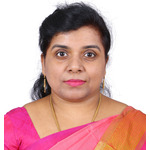

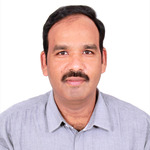


The Department of Computer Science offers a robust and modern infrastructure designed to support high-quality teaching, hands-on learning, and advanced research. The facilities are regularly upgraded to keep pace with emerging technologies and evolving academic requirements.
Classroom & Smart Classroom
The department is equipped with a ICT-enabled smart classroom featuring high-resolution projectors, digital writing panels while all classrooms are equipped with projectors. These classrooms support interactive teaching, live demonstrations, and blended learning approaches that enhance the overall learning experience.
Computer Laboratories
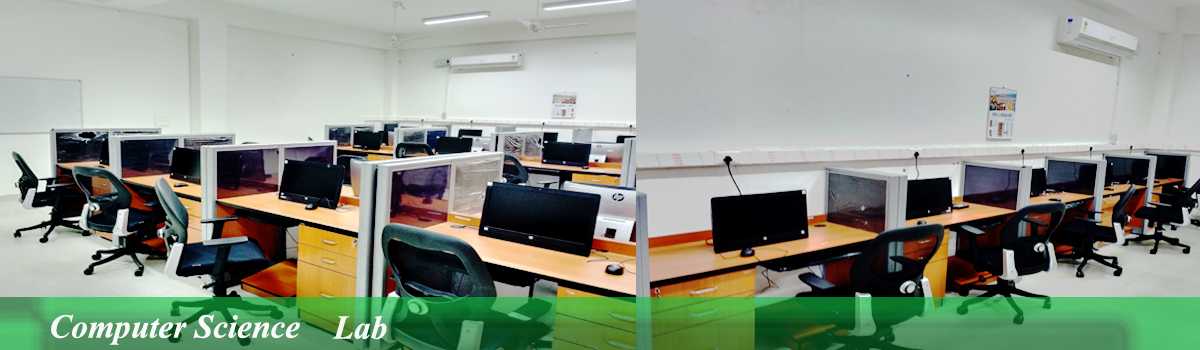
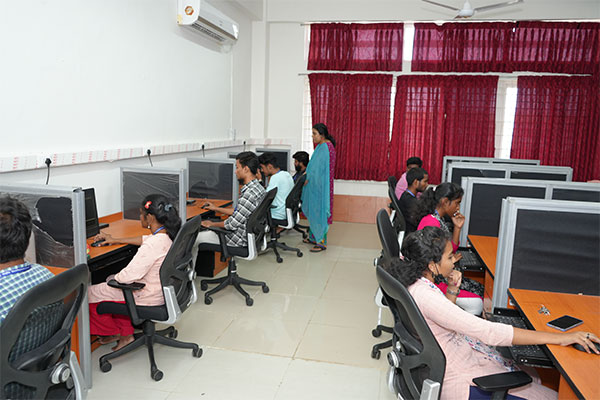
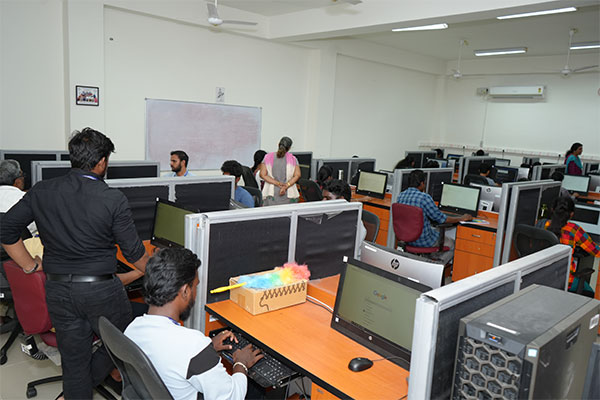
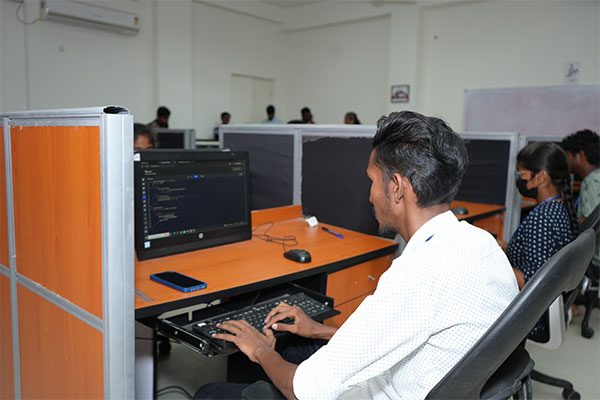
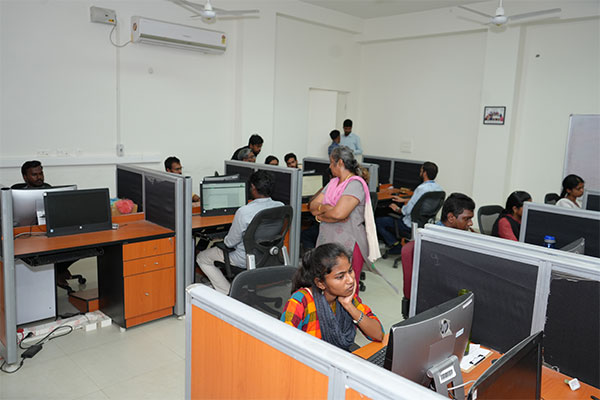
DCS maintains two state-of-the-art computer laboratories namely Alan Turing Lab and Dennis Ritchie Lab equipped with 60 high-performance desktops, internet connectivity, and open-source software tools. The labs support programming, AI/ML projects, image processing, data analytics, networking, and advanced computational tasks. Dedicated lab sessions ensure that students gain extensive hands-on exposure across courses.
Research Laboratory
A dedicated research lab provides computing facilities for M.Sc., PGDDS, and Ph.D. scholars. The lab includes two high-end desktops, Tower Server, Rack Server, 8 GPU-enabled systems and access to research software required for machine learning, deep learning, high-performance computing, and data science.
High-Speed Internet & Wi-Fi
The department is fully supported by the university’s high-speed fiber-optic internet backbone. Wi-Fi connectivity is available throughout the block, enabling students and faculty to access cloud platforms, online tools, and research databases seamlessly.
Software Resources
The department provides access to open-source software, including programming IDEs, data science tools, simulation packages, computational libraries, and learning management platforms.
Support Facilities
The department ensures technical support for lab maintenance, software installation, and computing assistance. Students receive guidance from faculty members, research scholars, and trained technical staff for project development and research activities.
 |
 |
 |
 |
Student Activities
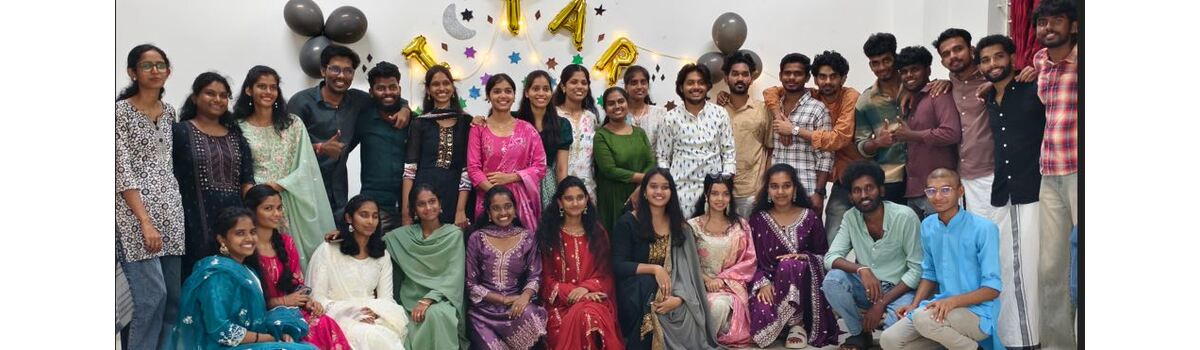
The Department of Computer Science encourages students to participate in a wide range of academic, technical, and co-curricular activities. These activities help students strengthen their problem-solving abilities, teamwork, communication skills, and leadership qualities.
Significant Projects of A.Y. 2025 – 26
- CUTN Ride App
- CUTN – Mess Reduction System
- CUTN – Attendance Management System for Hostel Inmates
- OBE based Student Performance Assessment System
Clubs & Technical Forums
Students actively contribute to technical clubs and interest groups focusing on areas such as programming, artificial intelligence, data science, open-source technologies, cybersecurity, and innovation. These forums provide a platform to explore emerging technologies and collaborate on interdisciplinary projects.
Student Achievements
Students from the department have consistently performed well in national-level examinations, internships, and projects. Many students secure industry internships, research internships, and placements in reputed organizations, while others pursue higher studies in premier institutions.
Student Support Services
The department offers continuous academic mentoring, technical support, and guidance for projects, internships, competitive exams, and career development. Faculty advisors, research scholars, and technical staff ensure that students receive academic and personal support through their programmes of study.
No. of Scholars: 13
No. of Publications: 36
H-index of the Department: 09
No. of Citations: 310
The Department of Computer Science engages in a broad spectrum of cutting-edge research domains that address both foundational and emerging areas of computing. Research activities span theoretical, experimental, and application-driven themes. Key focus areas include:
Artificial Intelligence & Machine Learning
- Machine Learning and Deep Learning
- Explainable AI (XAI)
- Artificial Emotional Intelligence
- Agentic AI
- Generative AI (LLMs and LVMs)
- Multimodal Analysis (Image, Text, Audio, Video)
- Text Classification, Summarization, and Question Generation
Image, Signal & Video Processing
- Image Processing, Signal Processing, and Video Processing
- Medical Image Analysis
- Digital Watermarking and Steganography
- Image Security, Pattern Recognition, and Feature Engineering
Cyber Security & Forensics
- Cyber Security and Network Security
- Cyber Forensics
- Security in Wireless Sensor Networks
- Cryptography and Blockchain Technologies
- Big Data Security Analytics
IoT, Embedded & Intelligent Systems
- Internet of Things (IoT)
- Intelligent and Autonomous Systems
- Smart Environments and Sensor Networks
Data Science & Big Data Technologies
- Big Data Analytics
- Social Media Data Analytics
- Clinical AI and Healthcare Analytics
Software Engineering & Applications
- Mobile and Web Application Development
- Society-Oriented Applications
- Software Systems and Intelligent Application Design
Research Scholars
The Ph.D. scholars of the department contribute significantly through publications, conference presentations, datasets, and software tools.
Ph.D. ‘s Awarded
| DATE OF VIVA-VOCE | NAME OF THE SCHOLAR | NAME OF THE SUPERVISOR | MODE |
| 04-10-2021 | MUHAMMED NIYAS P | Dr. P. THIYAGARAJAN | FT |
| 25-08-2023 | JANARDHAN N | Dr. K. NANDHINI | FT |
| 28-06-2024 | ENOCH ARULPRAKASH | Dr. A MARTIN | FT |
| 22-10-2024 | KALIVARAPRASANNA BABU G | Dr. R. SARANYA, Dr. P. THIYAGARAJAN | FT |
| 26-12-2024 | KIRAN KUMAR KONDRU | Dr. R. SARANYA | FT |
Ph.D. Scholars on roll (As of April 2026)
| ACADEMIC YEAR | NAME OF THE SCHOLAR | NAME OF THE SUPERVISOR | MODE |
| 2019 – 2020 | SENTHIL KUMAR P | Dr. K. NANDHINI | FT |
| 2019 – 2020 | KATHIRAVAN P | Dr. R. SARANYA | FT |
| 2020 – 2021 | HIMANSHU KUMAR | Dr. A. MARTIN | FT |
| 2020 – 2021 | MUNAWWAR K V | Dr. K. NANDHINI | FT |
| 2020 – 2021 | PATRICK LABOSO | Dr. A. MARTIN, Dr. P. THIYAGARAJAN | FT |
| 2023 – 2024 | BHUVANESWARI S | Dr. R. SARANYA | FT |
| 2023 – 2024 | T P GIRISHWARAN | Prof. PVSSR CHANDRA MOULI | PT |
| 2023 – 2024 | V SHANTHI | Prof. PVSSR CHANDRA MOULI | PT |
| 2023 – 2024 | SHARMILA | Dr. A. MARTIN | PT |
| 2024 – 2025 | SUGANYA | Dr. B PREMA MAYUDU | PT |
| 2024 – 2025 | PRABHAGARAN | Dr. A. MARTIN | PT |
| 2025 – 2026 | PUPPALA SAI RATNA | Prof. PVSSR CHANDRA MOULI | FT |
| 2025 – 2026 | V SUBHASHINI | Prof. DEJEY | FT |
Publications & Outreach
Faculty members and research scholars regularly publish their findings in peer-reviewed journals, conferences, and edited volumes. The department promotes participation in workshops, conferences, symposiums, and collaborative research initiatives across institutions in India and abroad.
Research Facilities
The department hosts a dedicated research laboratory equipped with high-performance computing systems, GPU-enabled workstations, specialized software tools, and access to digital resources. These facilities support advanced experimentation, simulation, data analysis, and prototype development.
Collaborations & Projects
The department actively engages in collaborations with academic institutions, industry partners, and government agencies. Faculty and scholars undertake research projects that address real-world challenges, contributing to technological innovation and societal development.
Head of the Department
Department of Computer Science
Central University of Tamil Nadu
Thiruvarur – 610 005
Phone : +91-4366-277230
Email : hodcs@cutn.ac.in